
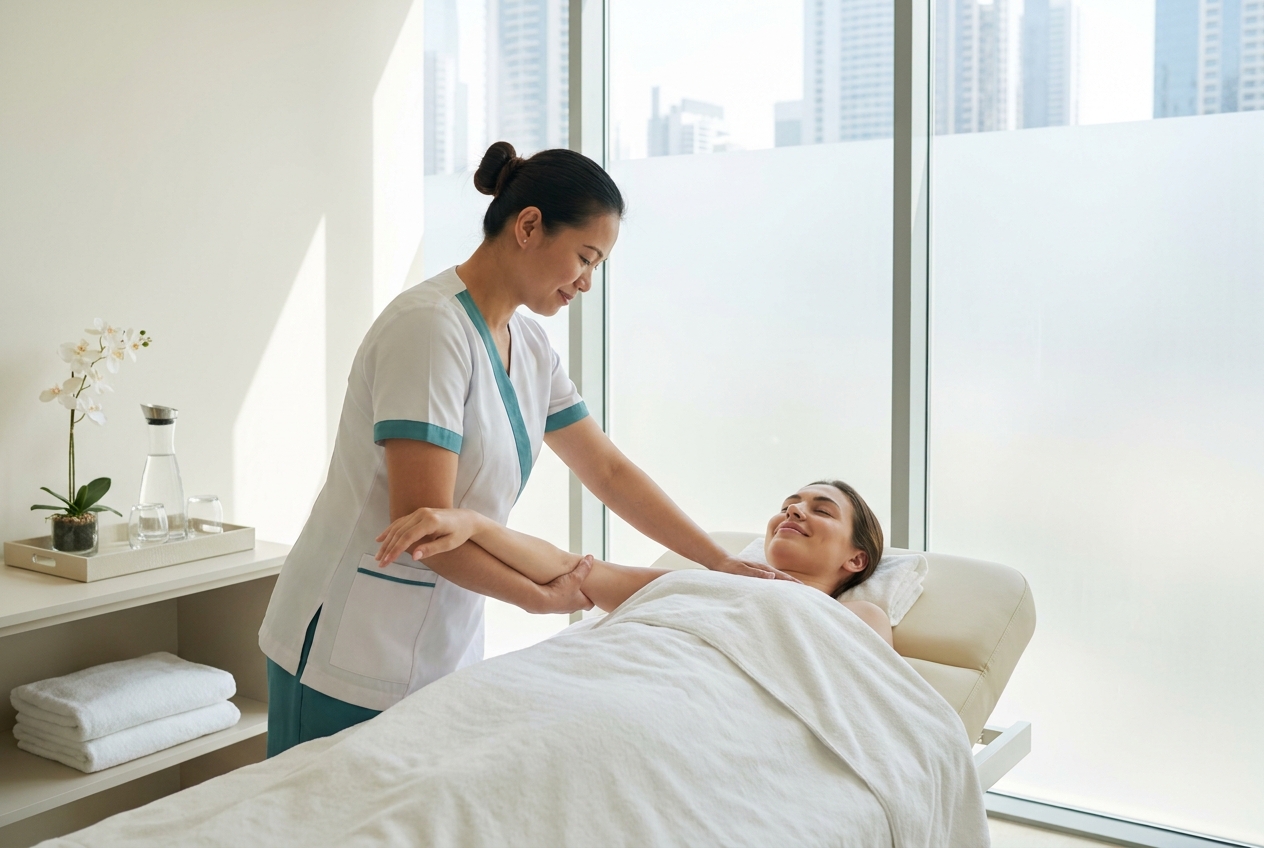
Manual lymphatic drainage is deliberately gentle, but patients often have questions about what happens afterwards. Will swelling reduce immediately? Should you drink extra water? Is tiredness normal? If you are considering lymphatic massage in Dubai, understanding the usual responses and sensible aftercare can help you feel prepared and get the most from your appointment.
Lymphatic massage uses slow, light, rhythmic movements to encourage fluid towards functioning lymph nodes. It is different from deep tissue massage: firm pressure is not needed to influence the superficial lymphatic vessels. Treatment may be recommended as part of post-surgical care, to manage certain types of swelling, or to support recovery when clinically appropriate.
What may you notice after lymphatic massage?
Responses vary according to your reason for treatment, general health and the amount of swelling present. Some people notice that the treated area feels lighter or less tight soon after a session. Others experience a more gradual change over several appointments, particularly when swelling has been present for a long time.
You may also need to urinate more frequently for a short period as your body processes fluid. Mild tiredness or deep relaxation can occur, especially if you arrived stressed or have been sleeping poorly. These effects should be temporary and should not feel severe.
Will swelling disappear after one session?
Not always. A single session may improve comfort, but persistent or post-operative swelling often needs a planned course of care. Your response depends on the cause of the swelling, how recently it developed and whether compression, movement or other medical advice forms part of your recovery plan. PhysioFit’s lymphatic drainage massage in Dubai is tailored to your presentation rather than delivered as a one-size-fits-all routine.
Practical aftercare for the next 24 hours
Aftercare should be simple and comfortable. Unless a doctor has placed you on fluid restriction, drink water normally and respond to thirst; there is no need to force excessive amounts. Choose light meals if you feel relaxed or slightly tired, and limit alcohol immediately after treatment because it can contribute to dehydration and poor sleep.
Gentle movement is usually helpful. A short walk, easy ankle pumps or relaxed breathing can support normal circulation without placing unnecessary strain on the body. Avoid turning the day into a hard training session. If your massage is part of surgical recovery, follow your surgeon’s restrictions before adding exercise, heat, compression garments or self-massage.
A simple post-treatment checklist
- Keep the rest of your day relatively light where possible.
- Drink according to thirst unless your medical team advises otherwise.
- Use gentle walking or prescribed mobility exercises.
- Wear compression garments only as instructed by your surgeon or therapist.
- Notice changes in swelling, skin colour, pain and temperature.
- Follow the personalised plan given at your appointment.
What should you avoid after treatment?
Very hot baths, saunas and intense exercise may increase circulation and aggravate swelling in some situations, so ask your therapist when these activities are appropriate. Do not perform aggressive self-massage over a healing incision or tender area. More pressure is not more effective for lymphatic drainage and may irritate recovering tissue.
If you are pregnant, positioning, pressure and treatment areas need to be adapted. A qualified therapist can explain whether pregnancy massage in Dubai is suitable for your stage of pregnancy and symptoms. New or sudden swelling during pregnancy should always be discussed with your maternity healthcare provider rather than treated as a routine massage concern.
When should lymphatic massage be postponed?
Lymphatic massage is not suitable for every person or every type of swelling. Treatment may need to be postponed if you have a fever, an active infection, unexplained sudden swelling, suspected blood clot, uncontrolled heart or kidney problems, or new shortness of breath. If swelling is red, hot, painful, rapidly worsening or affects only one limb without a clear explanation, seek medical assessment promptly.
After surgery, obtain clearance from your surgeon and share the procedure date, restrictions and any complications with your therapist. A good appointment starts with screening; it should never bypass medical advice or promise to “detox” a condition that needs diagnosis.
How often might you need treatment?
Frequency depends on your goal. Post-operative patients may benefit from closer sessions early in recovery, followed by wider intervals as swelling settles. Chronic swelling may require a broader management plan involving compression, exercise, skin care and medical follow-up. For general heaviness after travel or prolonged sitting, fewer sessions may be appropriate.
Your therapist should reassess progress rather than recommend an arbitrary package. Useful measures can include changes in comfort, movement, tissue firmness or limb circumference. If your swelling follows an injury or affects how you move, an assessment at our physiotherapy clinic in Business Bay can identify whether rehabilitation should accompany massage.
Book with confidence at PhysioFit Dubai
At PhysioFit, lymphatic massage is delivered with a clinical understanding of swelling, recovery and movement. Your therapist will ask about your medical history, explain what is appropriate for you and provide realistic guidance on aftercare and session frequency.
If you are managing post-surgical swelling, pregnancy-related heaviness or persistent fluid retention, book an assessment with PhysioFit in Business Bay. We will help you understand whether lymphatic drainage is suitable and create a calm, personalised plan for your recovery.