
If your legs feel heavy or your shoulders feel tight, it can be difficult to know which massage to book. Is lymphatic drainage simply a lighter version of deep tissue massage? No: they have different purposes. Manual lymphatic drainage is a specialist technique used within treatment plans for certain types of swelling. Deep tissue massage focuses on soft tissues such as muscles. Neither should be chosen simply because an area feels uncomfortable.
If you are comparing lymphatic drainage massage in Dubai with deep tissue treatment, start with the problem you need assessed—not the amount of pressure you prefer. Here is how to approach that decision safely.
What is lymphatic drainage massage for?
The lymphatic system helps drain excess fluid from body tissues. When it does not work properly, fluid can build up and cause lymphoedema. However, swelling has different possible causes: a swollen leg does not automatically mean you have a lymphatic problem.
Manual lymphatic drainage, often called MLD, is specialised massage intended to move fluid from swollen areas towards functioning lymph nodes. For diagnosed lymphoedema, NHS guidance describes it as one component of decongestive lymphatic therapy, alongside compression, skin care and exercise. It is not presented as a stand-alone cure.
If swelling is your main concern, ask whether you need a medical assessment before booking lymphatic drainage massage at PhysioFit. An existing diagnosis and any instructions from your treating clinician are more useful starting points than a general request to “drain” the area.
What is deep tissue massage for?
Deep tissue massage is a muscle-focused approach within the broader range of massage techniques. PhysioFit’s sports massage service includes deep tissue work, with pressure adapted to the person and their symptoms. It is a different treatment discussion from managing a diagnosed lymphatic condition.
For example, if your main concern is familiar shoulder tightness rather than swelling, you could discuss whether sports and deep tissue massage in Dubai is appropriate. That is a booking question, not a diagnosis: persistent or changing symptoms still deserve assessment.
Keep expectations realistic. The US National Center for Complementary and Integrative Health reports that massage may help some neck or shoulder pain, but benefits can be short-lived. This does not establish that deep tissue massage is superior to other approaches or that it corrects the cause of pain.
Which should you discuss with a clinician?
If swelling is the main problem
Explain when it started, whether it affects one side or both, and whether it changes through the day. Mention recent surgery, cancer treatment, injury or travel. These details help a clinician decide what needs investigating; they do not prove that massage is suitable.
If you already have a lymphoedema care plan, ask how any proposed treatment fits that plan. Do not replace prescribed compression, exercise or skin care with massage appointments. After surgery, share your surgical team’s instructions rather than choosing treatment from a standard package.
If muscle discomfort is the main problem
Describe the exact location, activities that provoke it and whether it affects sleep or everyday movement. Ask what the proposed massage is intended to achieve and how its effect will be reviewed. Short-term comfort and solving an ongoing movement problem are different goals.
You do not need to arrive knowing the correct treatment name. A physiotherapy assessment in Business Bay is an option if you are unsure where to start. Explain both the discomfort and any visible swelling rather than assuming everything needs the same technique.
When neither massage is the next step
Seek urgent medical assessment for new, unexplained swelling in one leg, particularly with calf or thigh pain or skin colour changes. These can be signs of deep vein thrombosis, a blood clot that needs prompt treatment. Recent surgery and long journeys are among the recognised risk factors.
If leg pain or swelling occurs with chest pain or breathlessness, seek emergency medical help immediately. Do not wait for a massage appointment. Red, hot, increasingly painful swelling with a fever or shivering also needs prompt medical attention because infection is possible.
Massage is not risk-free. NCCIH notes rare serious adverse effects, including nerve injury and fractures, with some reports involving vigorous massage or people at higher risk. Tell the clinician about your medical conditions, medication and recent procedures before treatment; stronger pressure is not automatically the better choice.
Three questions to ask before booking
- What needs assessment first? Ask whether your symptoms require a medical diagnosis or clearance before hands-on treatment.
- What is the specific goal? Clarify whether the plan addresses swelling management, temporary symptom relief or a wider rehabilitation need.
- How will we review it? Agree what changes to monitor and what would prompt reassessment instead of automatically booking more sessions.
PhysioFit offers both lymphatic drainage and sports massage in Business Bay. If you are unsure which service to enquire about, contact the clinic and describe your symptoms and relevant medical history. Ask about an appropriate assessment before deciding on treatment.
This guide provides general information, not a diagnosis or an individual treatment recommendation.
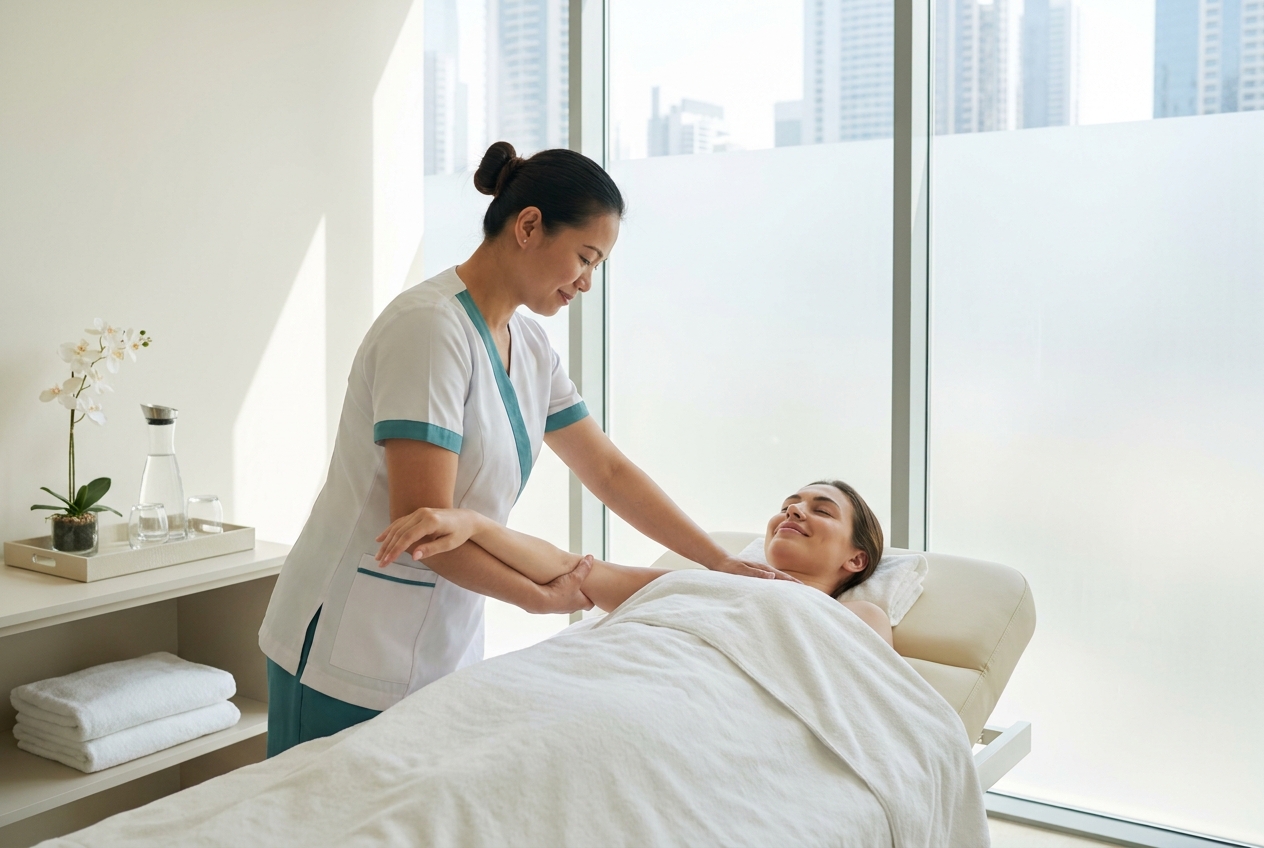
Featured image is illustrative; it is not evidence of a real PhysioFit patient, clinician, treatment or premises.
Further reading: NHS lymphoedema treatment guidance; NCCIH massage evidence and risks; NHS blood clot warning signs.